The Essential Guide to Canadian Self-Employment Tax Deductions
CRA-focused claims for sole proprietors and freelancers (T2125).
Chapter 1: Business-Use-of-Home Expenses
The CRA allows you to deduct expenses related to your home office if the space is used as your **principal place of business** or is used **only to earn income** and you meet clients there on a regular and ongoing basis.

The space must be used "regularly and continually" to earn business income.
Calculation Method (Actual Expense Proration)
You must calculate the deduction based on the percentage of your home's total floor space dedicated to your business. Unlike US tax, there is **no simplified flat rate** for self-employed individuals.
- Deductible Expenses (Prorated): Include utilities, home insurance, maintenance/minor repairs, rent, and mortgage interest (if applicable).
- The Loss Rule: You **cannot** use business-use-of-home expenses to create or increase a business loss. You can only deduct them up to the amount of net income before deducting these expenses.
- CCA Caution: Claiming Capital Cost Allowance (CCA) on the business portion of your home may trigger capital gains when you sell, potentially jeopardizing your Principal Residence Exemption. Always consult a professional before claiming CCA on your home.
Chapter 2: Vehicle & Travel Costs (Actual KM Tracking)
The CRA requires self-employed individuals to use the **Actual Expense Method**. You must track your business kilometres and total kilometres driven to determine the business-use percentage. Commuting from your home (principal place of business) is generally **not** deductible.
Key Requirements
- Detailed Logbook: A complete log of all business travel, including the date, destination, purpose, and distance (kilometres) is mandatory.
- Deductible Costs: Fuel, maintenance, insurance, registration fees, leasing costs, and CCA on the vehicle's capital cost.
- CCA Limits: The amount on which you can claim CCA (depreciation) for a passenger vehicle is limited by the CRA (e.g., $37,000 plus tax for vehicles acquired in 2024).
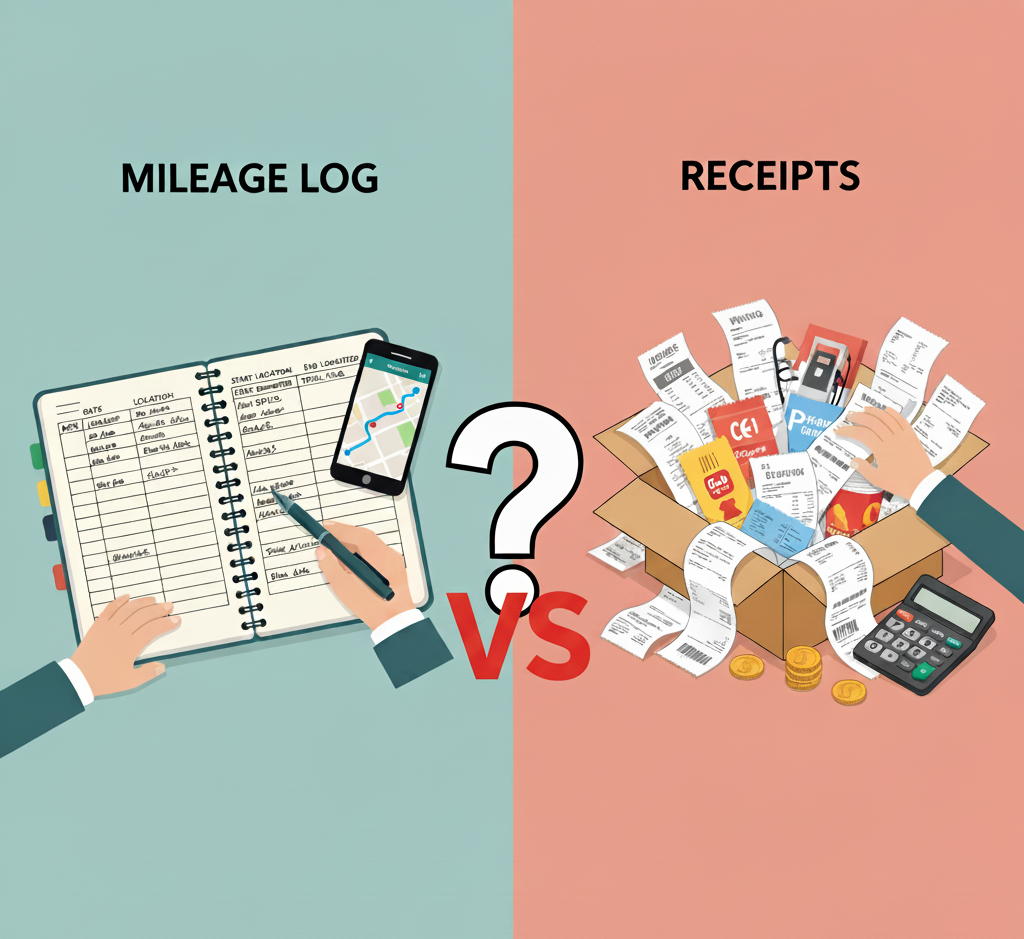
A clear, detailed logbook is required to justify the business-use percentage of your vehicle expenses.
Travel & Meals
If you travel outside your local area overnight for business, you can deduct 100% of airfare and lodging, and **50% of your meal expenses.** Keep all receipts.
Chapter 3: Supplies, Software, and CCA
Expenses are classified as either **Supplies** (fully deductible in the year purchased) or **Capital Assets** (must be deducted over several years using CCA).
Current Expenses (Deductible Now)
- Operating Supplies: Paper, toner, pens, small incidentals, and minor repairs.
- Software & Subscriptions: Cloud-based software (SaaS), monthly service fees, and web hosting.
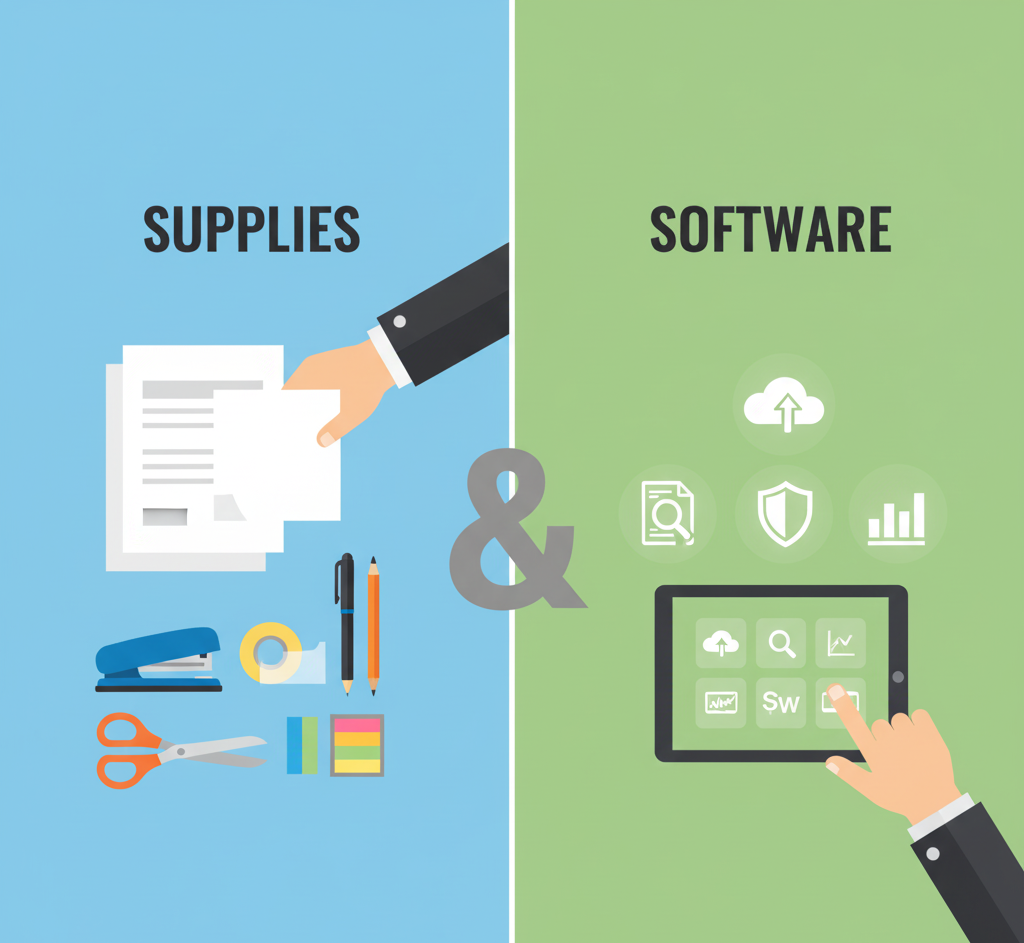
Business expenses must be "ordinary and necessary" to earn income.
Capital Assets (CCA)
Assets that last more than one year (like computers, camera equipment, or furniture) must be depreciated using Capital Cost Allowance (CCA). You deduct a percentage of the asset's value each year according to its CRA Class.
Chapter 4: Important Income & Other Deductions
Don't overlook these key areas specific to Canadian self-employment.
- Deductible CPP Contribution: As a self-employed person, you pay both the employee and employer portions of CPP. You can deduct the **employer portion** of your required CPP contribution from your business income.
- Health Insurance Premiums: You generally cannot deduct private health insurance premiums as a regular business expense. However, you can use a **Private Health Services Plan (PHSP)** to deduct health, dental, and vision costs tax-free, or claim the expenses as a personal **tax credit** (subject to the 3% net income threshold).
- Training & Education: You can deduct the cost of seminars, courses, and educational subscriptions that maintain or upgrade skills needed for your *current* business. (Cannot be for a new trade).
- Advertising & Promotion: Costs for your website, social media ads, business cards, and directory listings are fully deductible.
- Accounting & Legal Fees: Fees paid to accountants for preparing your business statements (T2125) and legal fees for business operations (not personal matters) are fully deductible.